
Learning
Center
Informational Videos
6 Videos
Rights-of-Way
Learn about transmission line rights of way and what to do if your property is next to one.
Informational Documents
-
What is Horizontal Directional Drilling?
-
What is Soil Boring?
-
What is a Substation?
-
Surveying Operations at National Grid
-
Transmission Rights of Way - Information for Property Owners
-
Forestry & Vegetation Management Brochure
-
Environmental Licensing and Permitting Overview
-
Massachusetts Grid Modernization
-
Our Vision for a Fossil-Free Future


Frequently Asked Questions
11 Questions
Site Preparation: Clearing of land and vegetation to prepare for the construction of transmission towers and lines.
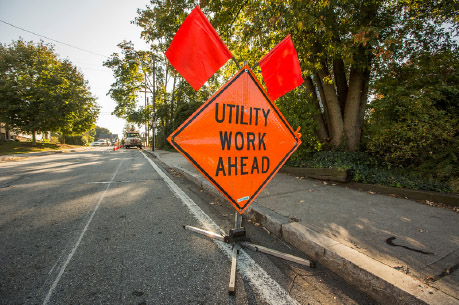
Traffic Management: Temporary road closures or detours may be necessary to ensure construction vehicles and equipment can move safely. Traffic controls will be in place to protect drivers and pedestrians.
Noise and Disruption: Construction activities can generate some noise from equipment and machinery. These impacts are temporary and may be noticeable during active work periods.
Safety Measures: Construction areas will follow safety protocols and include signs and barriers to protect both workers and the public.
Environmental Considerations: Crews will work to reduce environmental impacts, including controlling erosion and protecting wildlife habitats.
Public Communication: National Grid is committed to keeping neighbors and the public informed. Updates on timelines, construction schedules, and traffic changes will be shared through mail, door-to-door outreach, and project websites.
Completion and Restoration: After construction is finished, the area will be restored to its original condition.
Transmission Line Construction: Build high-voltage power lines that carry electricity long distances from power plants to substations.
Distribution Line Construction: Install lower-voltage lines that bring electricity from substations to homes and businesses.
Substation Construction: Build facilities that lower voltage levels so electricity can be safely distributed. These include transformers, switchgear, and control systems.
Pipeline Construction: Build pipelines to transport natural gas. This includes installing duct banks, manholes, valves, meters, and other infrastructure.
Renewable Energy Projects: Build energy facilities such as solar farms, wind farms, and hydroelectric plants.
Maintenance and Upgrades: Repair or improve existing infrastructure to maintain or increase reliability, safety, and efficiency.
Emergency Repairs: At times, urgent construction may be required to quickly restore services following outages, severe weather, or other unexpected events.
The practices below help maintain a safe and reliable utility service while also supporting environmental care:
Integrated Vegetation Management (IVM): IVM is a widely used approach across the utility industry to control vegetation that could grow tall enough to interfere with electric lines. It uses a combination of mechanical, chemical, and biological methods, as explained below.
Tree Pruning: Regular trimming of trees near power lines helps prevent outages and safety issues caused by branches falling onto or growing into the lines.
Tree Removal: Trees that may pose a risk to power lines are removed. This includes certain species, such as white pine, as well as dead, diseased, or otherwise poor-condition trees.
Selective Herbicide Use: State- and federally approved herbicides are carefully used to control plants that could grow too tall. Licensed applicators apply them by hand directly to the target plants. Low-growing shrubs are generally not treated. Herbicides are not sprayed over entire areas, and only products approved for sensitive locations are used.
Mowing and Hand Cutting: These methods are used where herbicides are not allowed or where vegetation is too thick or tall.
Biological Control: When taller plants are removed, low-growing plants can grow naturally. These plants compete for water, sunlight, and nutrients, helping prevent taller species from returning. This creates a valuable habitat for wildlife. In New England, these habitats are rare and support many plant and animal species, including some that are threatened or endangered.
Monitoring and Assessment: Vegetation is regularly checked to assess growth and determine what maintenance is needed.
Public Education and Outreach: National Grid works with communities to explain why vegetation management is important for safety and reliability and to encourage proper planting near power lines.
National Grid manages vegetation every 3 to 5 years to keep the system maintained.
Before construction work, such as soil borings, transmission projects, substation work, or distribution projects, vegetation is mechanically cleared to create a safe and efficient work area.
Along distribution lines, trees are usually trimmed every 4 to 7 years.
Some activities, like the Enhanced Hazard Tree Mitigation Program and the Enhanced Vegetation Management Program, do not follow a set schedule. Instead, they focus on areas with the most problems, especially where tree-related outages happen often.
The Energy Facilities Siting Board (EFSB) is an independent state board that reviews major energy projects. These include certain electric transmission lines, energy storage facilities, renewable energy projects, natural gas pipelines within the state, fossil-fuel power plants, and natural gas storage tanks.
The EFSB review process is adjudicatory, which means it is a formal legal process. In this process, project information is presented, written questions may be submitted, and participants share their views based on the information.
Early in the process, the EFSB holds one or more Public Comment Hearings. These hearings give community members a chance to learn about the project and share their input in a less formal setting.
Depending on the type of project, the EFSB follows one of the two review paths described below.
Consolidated State and Local Review (Clean Energy Projects): Used for renewable energy projects, energy storage facilities, and certain transmission lines. This process combines state and local permitting into one review that usually takes 12 to 15 months. Federal permits are handled separately.
Traditional EFSB Review: Used for projects that are not considered clean energy infrastructure. The EFSB conducts its own review while federal, state, and local permits are reviewed at the same time alongside the EFSB process.
National Grid encourages public involvement during both planning and construction. The Project Engagement Specialist connects the National Grid project team with neighbors and community members who may be affected by the work. Most projects have one or two Engagement Specialists assigned. Ideally, the team is engaged with both the project team and nearby stakeholders throughout all phases of the project.
The Specialist provides clear, easy-to-understand updates about the project, including what work is planned, when it will happen, and what you may experience. They also listen to questions and concerns and help make sure they are addressed.
You may see or hear from the Specialist through:
-
- • Local open houses or community events
-
- • Door-to-door visits
-
- • Mailed updates
- • Project websites or hotline numbers (for some projects)
Because projects can change over time, not all details may be available right away. When this happens, the Specialist works with experts to get accurate information and share updates as soon as possible.
Stakeholders typically include state and local officials, agency representatives, municipalities, special interest and environmental groups, and residents who live in or near the proposed project area. This also includes residents in nearby communities who may be affected by the project.
ISO New England Inc. (ISO-NE) is an independent, non-profit Regional Transmission Organization based in Holyoke, Massachusetts. It serves Connecticut, Maine, Massachusetts, New Hampshire, Rhode Island, and Vermont.
ISO-NE runs the region’s electric grid, makes sure there is enough electricity to meet demand, and helps move power across the system. It also manages the electricity markets and plans for future energy needs.
The Department of Public Utilities (DPU) is a state agency led by a three-member Commission. It oversees investor-owned electric, natural gas, and water utilities in the Commonwealth.
The DPU reviews rates and services, monitors service quality, and helps ensure safety in transportation and gas pipelines. It also reviews where energy facilities are located and looks at new ways to regulate utilities.
https://www.nationalgridus.com/Our-Company/EMF
National Grid has trained personnel to measure electric and magnetic fields in customer locations and along our transmission and distribution lines. Property owners wishing to have EMF measurements taken should call National Grid’s toll-free customer service line at 1-800-322-3223 in New England.